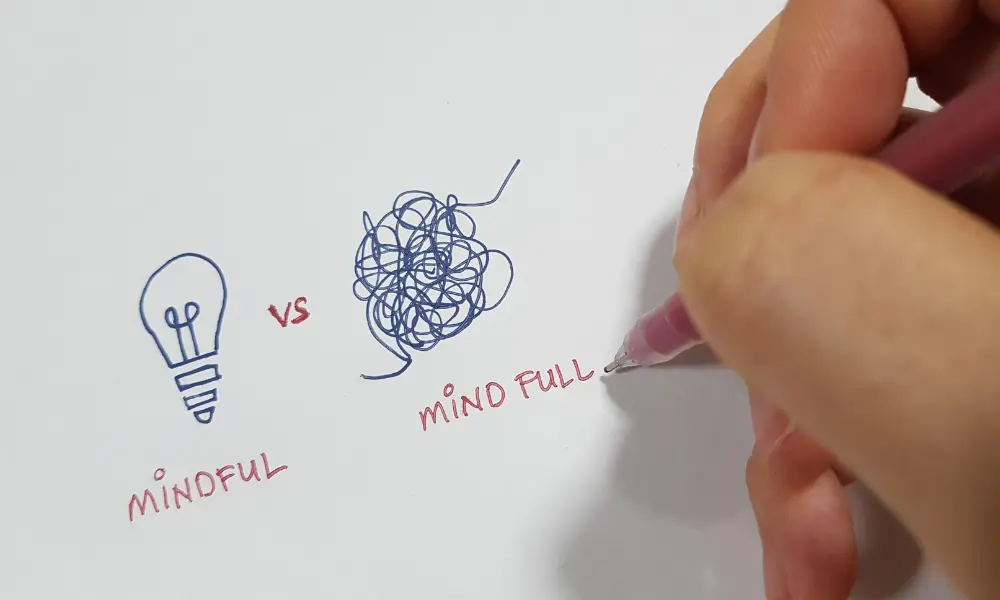
Going blank in the mind is a physiological phenomenon that can be controlled. This phenomenon is extremely common. In a study conducted by researchers at the Universiti Malaysia Perlis, as many as 42.6% of students experienced cognitive lapses and difficulty recalling material when they feared negative evaluation and were under performance pressure.
The defining trait of a great speaker is not the absence of mistakes or being perfect, but keeping a cool head when unforeseen situations arise.
Why does the brain freeze?
What lies behind the internal mechanisms of a cognitive block? When stepping onto the stage, we manage a complex cognitive ecosystem where efficiency depends on attentional balance.
Mind-blanking is the result of attentional control theory and the affective filter hypothesis. Under conditions of severe stress, anxiety disrupts attention and redirects resources away from task-relevant speech processing toward irrelevant stimuli, such as self-doubt or fear of judgment.
Simultaneously, the “affective filter” acts as a barrier that blocks linguistic competenceand prevents the retrieval of the right words. Working memory capacity is strictly limited to just four to seven items. What does this mean for mind-blanking? Under increased cognitive load caused by anxious thinking, the brain lacks the bandwidth to organize speech in real time, causing us to freeze.
Performance pressure, fear of negative evaluation, physiological arousal, or being recorded can all add fuel to the fire.
Solid preparation
If you prepare a presentation at the last minute and don’t truly know the content inside out or which slide follows next, managing the narrativebecomes much harder, increasing your stress levels. Of course, time isn’t always on your side, but whenever possible, prepare thoroughly and master the material inside out.
Memorize or not?
It depends. If you tend to forget and freeze, you might try a different approach: using bulleted bullet points.
For some, learning a speech word-for-word creates an all-or-nothing requirement for recall, which can trigger a mind blank under pressure. Instead, use the bullet-anchor method, which leverages the expert reversal effect. While beginners may need a structured, step-by-step script, experts often perform better with key points, allowing for a freer, more fluid delivery.
Relaxation techniques
Relaxation techniques are a topic well worth exploring. There are many methods available, so everyone can find something that works for them. You can practice them immediately before a presentation or, ideally, repeat them regularly to train your nervous system to calm itself down. Here you will find a post covering various methods you can try.
Audience questions
How does it work? You ask audience questions to buy yourself time to think about what to say next. For example: “Is everything clear so far?” or “Does anyone have any questions?”
Lifesavers
What else can you do? Summarize what you’ve just said.
For example: “To make sure we’re all on the same page regarding this last point, let me briefly recap…”
By repeating the previous point, you give yourself a moment to get back on track and resume your speech.
Master stress once and for all
The techniques presented can significantly help you manage a shaky voice, but remember that they only treat the symptoms.
If you want to learn how to manage stress once and for all and reduce overall stage fright, which in the long run will minimize physiological stress symptoms like a trembling voice, book a 1-on-1 session with me or check out this course.
Summary
Mind-blankingis simply the result of how our brain manages its limited attentional resources under high stress. As a public speaking coach, I have seen this happen time and time again, whether in intimate meetings or on massive stages. It can happen to anyone. The question is: what will you do when it happens to you?
Good luck! 🙂
Author:
Hi, I’m Magda Kern. I’m a psychologist, the top 11 public speaking coach worldwide, a lecturer, working for companies from the Fortune 500 list, a business trainer with 12 years of experience, a TEDx coach, and an ex-vocalist based in Switzerland. I help people prepare and deliver unforgettable presentations and deal with stress.