

Sound familiar? Whether you’re on stage for the first time or you’re an experienced speaker, those nerves can sneak in. And you’re not alone. Even icons like Adele and John Lennon have admitted to battling stage fright. In this way, your brain is reacting to pressure and trying to protect you.
The good news? You can learn to manage it or even use it to your advantage. If you roll your eyes now, continue reading:)

Stage fright can feel overwhelming, but it’s not permanent. With the right strategies, you can learn how to manage stress. Techniques like deep breathing, visualization, and positive affirmations can help you calm your nerves. These tools prepare you to step into the spotlight feeling calmer, more focused, and confident.
Deep breathing is a simple but effective way to reduce stage fright. Here’s how to do it effectively:
Exhale gently through your mouth, releasing tension with each breath.
Repeat this rhythm for a few minutes to slow your heart rate and calm your mind.
This technique signals to your body that you’re safe, helping to decrease the physical symptoms of stage fright.
Pair this with progressive muscle relaxation:
This can be your grounding ritual before any public speaking. If you want to read more about progressive muscle relaxation and other relaxation techniques, click here.

Visualization is like a mental dress rehearsal. Picture yourself on stage, confident, composed, and connecting with your audience. The more detailed and vivid the image, the more familiar and less intimidating the real experience becomes. You can imagine colors, sounds, physical sensations, and smell. It will allow you to immerse yourself better.
Complement this with positive affirmations- short, empowering phrases that reshape your internal dialogue, which is usually negative when we are stressed before a presentation. Examples:
“I am prepared and capable.”
“I speak with clarity and confidence.”
“I’ve got this.”
“I am calm, focused, and in control.”
Repeated regularly, these affirmations become your inner support system, helping you stay grounded and confident.

When anxiety spikes, grounding techniques can bring you back to the present moment. Try these simple steps:
Press your feet firmly into the ground to feel stable and connected.
Touch a textured object like a bracelet, coin, or piece of clothing to engage your senses.
Focus on your surroundings and notice colors, sounds, or smells to anchor your awareness.
These sensory cues help interrupt spiraling thoughts and regain your sense of control.
Alongside grounding, practice positive self-talk. Replace fear-based thoughts like “I’m going to mess this up” with supporting alternatives such as:
“I’ve practiced, and I’m ready.”
“I can handle this.”
“I know my material.”
“I will do my best today, and that’s enough.”
Changing your internal self-talk can shift your emotional state and improve your performance. The more you practice, the more instinctive and effective it becomes.

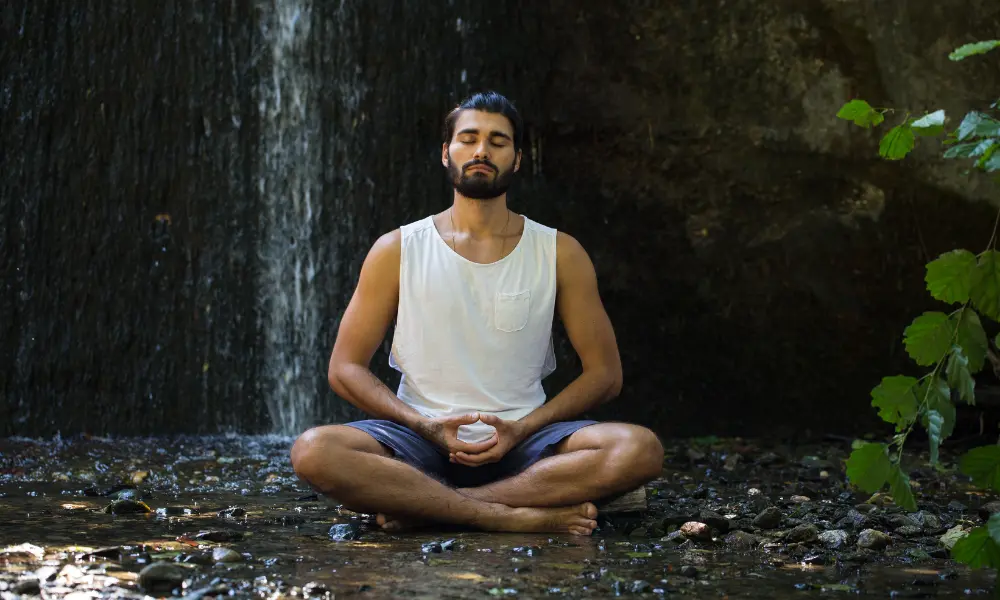
Meditation can be your long-term strategy for building mental resilience and dealing with anxiety. Just a few minutes a day can help you develop better stress resilience, calmness, and a focused mindset when you experience stressful situations. Here’s a simple way to begin:
Find a quiet space and sit comfortably.
Close your eyes and focus on your breath.
When thoughts arise, acknowledge them without judgment and return to your breath.
Incorporate mindfulness – the act of being fully present – into your daily routine. When you’re truly in the moment, fear has less room to grow. Many meditation styles naturally include deep breathing, enhancing their calming effects. Find the one that suits you best and make it your everyday practice.
If you’re new to meditation, start with short, guided sessions. You can find many of them on YT.
Practice and rehearsal are essential to building confidence. The more familiar you are with your material, the less stressful it becomes. Repetition turns uncertainty into certainty. When your content becomes second nature, you just know it, and that knowledge frees your mind to focus on delivery.
But rehearsal goes beyond memorization. Say your speech out loud a few times, and once you know the content well, try to implement these elements as well:
Tone: Adjust your voice to match the message and mood.
Transitions: Smooth out the shifts between next sections.
Delivery: Add energy, body language, stage movement, and eye contact.
Each run-through is an opportunity to polish your performance. Once you’re no longer focused on what to say, you can focus on how to say it. You can learn how to deliver a speech and the next time focus only on the content. Here you can find more information about the individual training.

A consistent pre-show routine can ground you before a performance, as good as meditation. Just like athletes have pre-game rituals, performers benefit from habits that help them get into the right mindset. Whether it’s a few deep breaths, a vocal warm-up, jumping for 30 seconds, or a moment of mindfulness, the key is to find what centers you and repeat it consistently.
What routines can you incorporate?
Deep breathing: Calms the nervous system and reduces anxiety.
Vocal warm-ups: Prepares your voice and boosts confidence.
Light stretching: Releases physical tension and increases energy.
Mindfulness or visualization: Focuses your thoughts and sets a positive tone.
Over time, this routine becomes your anchor, something like a familiar ritual that signals, “It’s go time.”

Nervous energy is normal, and it can actually help you. Even with thorough preparation, pre-show jitters are likely to appear. The goal isn’t to eliminate them, but to channel that energy into sharp focus and perform better.
Here are a few ways to manage and redirect nervous energy:
Take a brisk walk
Stretch
Breathe deeply
Visualize success
Remember, those nerves are a sign that you care. That adrenaline rush? It can be your edge. Many seasoned performers use that energy to enhance their delivery. With practice, your butterflies can become your superpower.
As you explore these preparation strategies, take time to discover what works best for you. Would a structured rehearsal schedule give you more control? Could a calming ritual be your secret weapon? What if your nervous energy was actually your hidden strength?

Author:
Hi, I’m Magda Kern. I’m a psychologist, the top 11 public speaking coach worldwide, a lecturer, working for companies from the Fortune 500 list, a business trainer with 12 years of experience, a TEDx coach, and an ex-vocalist based in Switzerland. I help people prepare and deliver unforgettable presentations and deal with stress.
Added to cart
Check out our shop to see what's available
