

The background that the viewers see is important for the speaker’s image. In addition to issues such as good lighting or technical equipment, it is an essential element of the presentation. A study in which the speaker presented himself in three different backgrounds: the room in which he is at the moment of presentation, a single-color background or a virtual background, showed interesting correlations.
The most preferred background was the one showing where the speaker actually was at the time. If you want to come across as authentic, trustworthy and knowledgeable, this is the background to choose. If you’d like to appear innovative, a plain, single-colour background works better. The virtual, “artificial” background was rated the worst. Viewers like to see bookshelves, as well as paintings, photos or framed diplomas. Men prefer the sight of books more than women do, while women prefer pictures more than men do (Zandan and Lynch, 2020).

In an online experiment, Yoo and Kim (2014) showed participants products on two different backgrounds: a plain one and one presenting the product in a commercial context. The results showed that placing a product in a commercial context was more effective at evoking the desired mental images than a plain background.
During training or meetings, the background can be used as an ice-breaker or used to integrate the team (Gross, 2020). In a formal situation, during an official meeting, the Star Wars or beach scene may be inadequate, but during a less formal meeting, it may help to integrate people who are locked at home by a pandemic and cannot meet in the office. It gives a social aspect and supports building interpersonal relationships.
The virtual background is a relatively new functionality. Some companies’ case was a response to the need for remote work in the home space, which was not always conducive to video conferences. Using artificial intelligence, it detects hair, face and body.

In addition to the background, colors are an important tool of persuasion. Surrounding ourselves with specific colors can affect our cognitive processes (Elliot and Maier, 2014).
Each of us can subjectively perceive individual colors. Colors can have different meanings, symbolisms, and messages depending on the cultural and geographical context (Płotka and Litwin, 2010). In the Hupek and colleagues (1997) study, participants indicated which colors they associate with anger, jealousy, and fear. Also, other colors are culturally perceived in a specific way. Orange symbolizes kindness and goodness, it is associated with strength, vitality, creativity and enthusiasm (Kilijańska, 2017). Green is the color of hope, awakening life and peace. It can also influence our creativity (Lichtenfeld et al., 2012).
Kaya and EPPS (2004) investigated what emotions colors evoke in us. They found that green evokes the most positive emotions because it was associated with comfort and nature. The second favorite color was yellow, which was a metaphor for happiness for the respondents, and also energy related to the sun, e.g. in summer. In third place was blue, the color of peace, water, sky and relaxation. The color red was less positively associated because it was also associated with blood and evil, apart from being associated with love. Black in this comparison brings to mind mourning and tragic events and wealth and power.

The color which grabs our attention the fastest is red (Hulten, Broweus and Dijk, 2011). In marketing, it is used to highlight promotions or special offers. It makes us make decisions faster and recall situations related to love and blood (Kilijańska, 2017). Accoring to Wohlfart (1986), looking at the red color can cause an increase in blood pressure and faster breathing. Red also increases women’s attractiveness in the eyes of men (Elliot and Niesta, 2008).

In the experiment by Lakens and colleagues (2017), participants who did not know Chinese were asked to assess the correctness of the translation of the character. The character’s color was manipulated and presented in white and black versions.
When the character was shown in white with a positive translation, or in black with a negative one, participants were much more likely to judge the translation as correct. This suggests that the meanings of white and black are universal and go beyond linguistic or geographical boundaries (Baldauf, 1997). However, associations with white are positive only when it appears in contrast with black; on its own, white remains neutral. In other words, white is perceived more positively because of the context (Löffler et al., 2017).

Blue can aid concentration in difficult tasks that require concentration on details (Xia et al., 2016). A Yu (2020) survey among Instagram users found that blue arouses user interest in images related to arts and culture. Blue has a universal overtone in various cultures and in most of them, it is mainly associated with calmness, stability, sadness and coldness (Amsteus et al., 2015).

White is seen as the color of peace, innocence and hope, as it brings to mind snow, weddings and cotton. On the negative side, it can be associated with boredom and loneliness (Kaya and Epps, 2004). People automatically assume that those wearing white are more truthful and honest (Meier, Robinson and Clore, 2004). A study of people from 23 cultures found that white was generally rated positively and black negatively (Adams and Osgood, 1973), and in Japan, Indonesia and China, white was the most preferred color (Saito, 1996). Its meaning still depends on culture: in Europe, white is associated with joy and cleanliness, while in China it can also symbolize mourning and death (Kopaliński, 2006).
In business, white used in your background or clothing can support your image, as it symbolizes truth, wisdom and reason. It is also the visual basis of many bank and car advertisements (Tatarska, 2013).
White can even make food taste better: participants rated raspberry mousse as sweeter and more intense in flavor when it was served on a white rather than a black plate (Piqueras-Fiszman et al., 2012). It is also one of the most popular colors for walls in homes and architecture (Ludwin, 2008), probably because it is associated with calm and safety and makes spaces look larger (Popek, 2001).
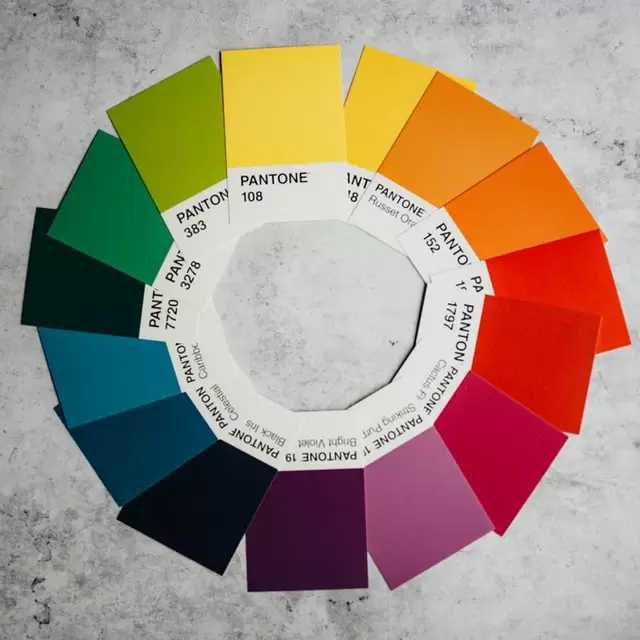
The cited research shows that background and colors play a large role in creating opinions. By using the right frames, colors and backgrounds, we can influence on the perception of us by the public. Colors can influence our cognitive processes and cognition in general. They can be used to induce desired behaviors or associations and influence the recipient’s emotions. The backgrounds used during a video conference determine the speaker’s perception. Equally important is the perspective of the camera positioning.
Let’s stay in touch. Contact me to get more information about the program, working methods, and pricing.
Bibliography:

Author:
Hi, I’m Magda Kern. I’m a psychologist, the top 11 public speaking coach worldwide, a lecturer, working for companies from the Fortune 500 list, a business trainer with 12 years of experience, a TEDx coach, and an ex-vocalist based in Switzerland. I help people prepare and deliver unforgettable presentations and deal with stress.
Added to cart
Check out our shop to see what's available
